Escaping Gravity.

Have you ever felt “stuck” in a life situation? Have you ever felt powerless to change your circumstances?

When we feel unable to change our lives, the words we use to describe our case often provide a clue for the way to resolve the situation. For example, feeling “stuck” actually describes the problem quite accurately. You see, stuck attention roots you to your circumstances. Keep your attention on your problem, and it fills your mind and thus, your life.

For example, if you feel stuck in a job, then your mind will get stuck on those things you hate about the job. What do you complain about to your friends? Where is your attention focused? On the problems—on what you don’t want.

Continue reading “Escaping Gravity.”

Chinese Medicine Offers Long-Term Relief for National Allergy Week

With Spring in full swing, more than 50 million people will suffer from allergies this season. According to the National Institute of Allergies and Infectious Diseases, allergies are the sixth leading cause of chronic disease in the United States, costing the health care system $18 billion annually. Chronic sinusitis alone affects nearly 35 million people in the United States. Western medicine has thus far been unable to provide a cure for allergies; its medications only treat symptoms.

Acupuncture and Nambudripad’s Allergy Elimination Treatment (NAET), by contrast, can provide safe, drug -free solutions to allergies. NAET allows the body to rid itself of its allergic response to the rebalancing the body.

From a Western medical perspective, an allergy is an overreaction by the immune system. NAET treatments integrate aspects of chiropractic, kinesiology and acupuncture to balance and strengthen the immune system so that these overreactions stop occurring. These techniques balance the flow of energy, or QI, in the body, so that allergy symptoms no longer occur. By allowing the body to find balance with the allergy, the immune system is able to strengthen, resulting in improved health and the removal of allergy symptoms. This also means that rather than simply attempting to alleviate the symptoms of the allergy, NAET and acupuncture go directly after the source to essentially cure the allergy itself.


For more information on how NAET and acupuncture can help patients with allergies, please call Pacific College at (800) 729-0941.

The Cult of Science

The grassroots hit movie “What the Bleep Do We Know” has stimulated many discussions about quantum physics and the notion that we create reality with our minds. The movie has also put a spotlight on the work of Dr. Masaru Emoto, whose photos of frozen water crystals suggest that water is sensitive to the energy of music as well as the subtle energy of words, thoughts, and prayers.

Some journalists criticize work such as that of Dr. Emoto, calling it “pseudoscience.” These critics belong to what I call “the cult of science.” They embrace a belief system that differs from fundamentalism only in its degree of dogmatism. You see, while fundamentalist preachers attempt to persuade you with fear of eternal damnation, some science zealots try to persuade you with facts.

These science zealots preach that measurable facts must be accepted as “the way the world is”, and that only irrational people would dispute facts. Facts, however, represent only one viewpoint on reality. Other viewpoints and other facts can be equally useful in describing the world. For instance, light appears to be made of particles that can be measured by carefully counting photons. Yet, focus a light through a double-slit partition, and it behaves like a wave by casting a shadow that resembles a wavelike pattern. Light’s nature and the nature of reality, depend on how we look at it. This relativistic viewpoint at the core of quantum reality does not pretend to be the ultimate truth, rather, it represents a new description of reality with far fewer limitations on the apparent solid nature of the world.

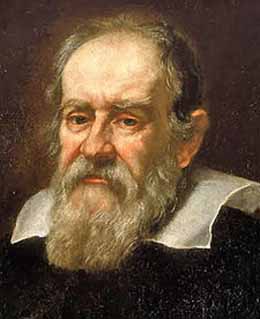
Our knowledge, makes great leaps when visionaries with keen powers of observation see beyond the accepted description of reality—these scientists create a new paradigm—a new way of looking at the world. The danger, of course, in seeing things differently is criticism from people who cannot yet imagine the new reality. Galileo faced harsh criticism by suggesting that his belief system, science, had more relevant answers than the prevailing power, the Vatican. Throughout the 1900s, science replaced the Church as the predominant authority on reality. Yet, we are beginning to experience a shift in viewpoint as physicists, mystics, and ministers question the authority of science-based factualism.

Quantum reality brings science full circle: back to spirit. This new description of the world embraces the immeasurable realms of probability, choice, and intention. This viewpoint reaffirms our Divine nature to shape reality. As the quantum worldview of reality becomes more accepted, more people will experience interesting phenomena with greater regularity. I believe that the experiences of synchronicity, intuitive knowing, precognition, mediumship, and other phenomena that are ridiculed today as pseudoscience, will be widely accepted and experienced as reality in the near future.
Who Inspires You?

Who inspires you? I am inspired by people whose enthusiasm about their life compels me to share their message with others. Their passion for their dreams inspires me to reconnect with my highest vision for my life. When we remember that we are much more than our roles, our nationalities, our special interests, our bank accounts, and our body-fat index, we can be open to the light of the divine and become inspirational beings that bless the lives of others.

By inspiring others, we can help to create heaven on earth. In fact, the first definition for the word “inspire” reads: “to affect, guide, or arouse by divine influence.” Inspire also means “to breathe life into”…so breathe life into someone’s life, inspire them!

John F. Kennedy inspired his generation with a goal to put a man on the moon by 1970. It’s been said that a goal is a dream with a deadline. Moving towards an inspirational goal energizes us; it catalyzes our resources and aligns our actions. Use that as your guide for voting this year—vote for the person or party whose vision inspires you!

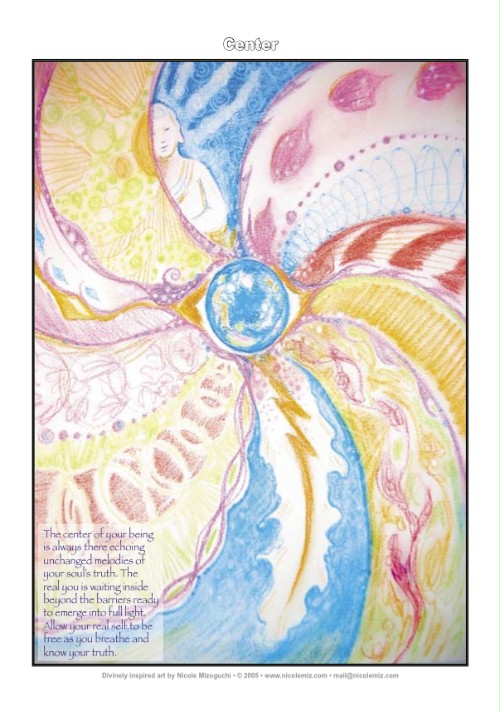
This issue of the Holistic Networker brings inspirational messages from talented voices in our community. La Rue Eppler’s article, “I was Seduced by a Genius” reminds us of the power we have right at our fingertips. Nicole Mizoguchi’s inspirational art piece, “Embracing Light” can be clipped and posted on your refrigerator or office wall so that others may also be inspired. Nicole’s art will be featured on October 29th at “The Upper Room”, a celebration of creative artists and the creative in each of us. This popular monthly gathering brings together the metroplex’s brightest minds, bodies, and spirits for an evening of inspiration, fun, and creativity. (See HolisticNetworker.com for details.)

We also reviewed the books How to Avoid the Cosmic 2×4 by local author and healer, Rita Louise, Ph.D., and the Space Clearing Kit by Christan Hummel. See also, Stephen Simon‘s review of the movie “What the Bleep Do We Know?”. This film about consciousness played to sold out theatres on the west coast and it has just arrived in Dallas. See it at the Loews 14 Cityplace or Loews City View, and discover why people are calling it the “thinking man’s Matrix”.

Wishing you an inspired autumn!

Tony Cecala, Ph.D.

What is Your Passion?

Do you leap out of bed in the morning? Are you excited about your life? Some people eagerly launch into their day and their enthusiasm infects everyone they meet. We lose track of time when we are engaged in our life’s work. We become absorbed in the flow of life and feel energized in a way that no caffeinated drink can supply. We know when we are in the flow—it just feels right. We have loads of energy and we leap—rather than obsess—over obstacles. Freud is often quoted as saying that “mental health is the ability to love and to work.” Does billionaire Steve Jobs, CEO of Apple and Pixar, need to work? Of course not. His passion and enthusiasm for his creative projects fuel both companies to succeed and creates joy for millions of customers. I recently met a man who sold his successful company for a small fortune. He took a well-deserved break and now runs a small e-business. He told me, “How much golf could I play?” I sometimes feel that a long retirement and freedom from work would make me very happy. However, I think a passion-filled life with exciting projects and people to love generates more joy than sitting on the beach with a frozen mixed drink.

What is your passion? What would you do if you didn’t need money? The answers to these questions are important because when we “follow our bliss” our lives naturally get easier and we find that synchronicity appears. Do you wonder why you are miserable when doing certain things? It is your soul guiding you! Clearly and distinctly, you are always being guided towards your greatest joy and away from that which doesn’t feed your soul. We joke around our house that people forget to eat when they are passionate about their life. We say that “life is feeding them.” I know that when I forget to eat, I’m on the right path for me. I’ve discovered what millions of small organizations have already realized—that the internet can connect all of us in ways that enhance and enrich our lives. From chat to blogs, auctions and e-business, there has never been so much opportunity to reach out and make a difference in the world.

Which companies are changing the world? Small businesses are finding new ways to connect with customers and colleagues worldwide. I often think that with six billion people on the planet, certainly a tiny percentage will appreciate (i.e., pay you for) your contribution to the world. When you use the internet, you have a much greater
chance of reaching that tiny percentage. Your life’s work can certainly be joyful and valuable and profitable—”as you give, you
shall receive.”

Enjoy your summer!
Tony Cecala, Ph.D.

Embracing the Shadow

Do you consider yourself bigoted or greedy? Are you filled with conceit? Most people, when asked, do not see themselves as having negative traits. You see, the ego has a place for these undesirable emotions—we call it the subconscious. Freud popularized the term and recognized that we hide resisted experiences—those we judge as horrible—in this mental sub-basement. Ever wonder why dreams can be so frightening? Dreams open a crack in the cellar door and give us a glimpse into “the little shop of horrors” that we’ve disowned.

Carl Jung took this idea further and observed that entire cultures (and all of humanity) share a “collective unconscious”. These archetypal images and myths reappear throughout history in societies separated in both time (different eras) and space (different continents).

In his recent book, Blink: The Power of Thinking Without Thinking, Malcolm Gladwell points out that each of us are driven by unconscious biases. He noticed that after growing his hair long he was ticketed for speeding far more often, than previously (with short hair). He wondered if some kind of bias was at play. He then discovered that each of us have unconscious biases that can be measured in a cognitive psychology lab. These prejudicial biases exist in our collective unconscious. Beliefs at this level of consciousness definitely influence us—whether we are aware of them or not.

If each of us has a “shadow side”, an unconscious pool of dirty, dark beliefs that drive our behavior, our preferences and our lives, then how can we achieve peace on earth if we cannot root out evil in our very own consciousness? A good first step is to simply accept that this evil shadow exists. There are many enlightening books, classes, and practices that can help you integrate your shadow self. Body-centered psychotherapy, like Radix®, yoga and meditation classes and simple mindfulness training work wonders. For example, the Avatar® Course instructs us to become aware of our self-deception signals: gossip and being critical of another. People that we criticize mirror our own behavior that we hide from ourselves and others. (“If you spot it, you got it”.) Look into the Avatar Course online (theavatarcourse.com) and you’ll find seven free mini-courses that can help you integrate your shadow self and realign yourself with your life purpose.

These integrity practices, when done with the intention of helping all sentient beings, can profoundly improve your experience of the world.

Warm regards,
Tony Cecala, Ph.D.

Loss and Grieving

Grief, the emotional response to any loss, can powerfully overwhelm us with a flood of seemingly unending feelings. Grief can incapacitate us, making work and daily life seem meaningless. A grieving heart feels terribly vulnerable: a tender memory of our loved one, or a sad song on the radio can bring on a flood of tears. A grieving heart unfolds itself, releasing unexpressed feelings: anguish, despair, hopelessness.

In grieving, we experience the deep pain of loss. Yet, our loss is not of the other person, rather, we grieve the loss of our relationship with the other person. Our attachment—the emotional energy that we invested in the relationship—has lost its “anchor.” No wonder we feel ungrounded; our reference point for who we are in relation to the other has vanished: We feel that we have lost a part of ourselves. Through grieving, we painfully let go of our ego’s attachment to the relationship and reclaim our sense of Self: We ultimately rediscover that the Source ofour happiness comes from within us.

Loss and grieving offer us a path of opportunity to reawaken our feeling selves and to open our hearts to experience not only anguish, but a broader range of emotions, including true happiness and joy.

Grieving moves us directly into our heart to process the source of our attachments and to find ourselves—again—as the Source of our lives.

Warm regards,

Tony

Living Fearlessly

In his book, I: Reality and Subjectivity, Dr. David R. Hawkins notes that the exact time of our death is already determined at our birth. This one statement—verified with kinesiology— implies that we’ve made choices regarding our life that not only include our birth time, but also the endpoint of our life experience.

If our life endpoint is already determined, then how we live today is more important than anything else. I’m reminded of the Native American expression, “Today is a good day to die.” This radical, fearless expression of living life with no regrets and no worries contrasts deeply with today’s ceaseless programming by corporate media to “be afraid, be very afraid.” What does living fearlessly feel like? If you absolutely knew you would die tomorrow, how would you live today?

Can you remember how serious life seemed in high school? How scary do your high school affairs seem now? The only thing that has changed from that time is your perspective — your “distance” in time. Now remember how serious the last two years have seemed. You’ve survived all the security alerts, and you can’t even remember the names of all those scary biotoxins that used to keep you up at night. By adopting a broad perspective and living fearlessly, today’s events will also appear non-threatening. Refocus on the entire landscape of your life — the Divine timing and the synchronicities will become clear. From this perspective, the rise and fall of political regimes, news of “the economy,” and news of the latest “killer” disease are neither captivating nor scary.

This is the value of vacations and retreats. For a short while, we clean up our day-today life affairs to the point that we can step away from our computer and TV and enjoy time alone or with friends and family. We reminisce and we plan, and our big picture comes back into focus. We remember what is important and what is ephemeral. We remember that people and relationships matter. We remember that love and kindness are more important than the material gains that we experience in this lifetime. And, if we’re fortunate, we remember that we just might die tomorrow and we fully experience the richness of each precious moment today.

Enjoy your summer!
Tony Cecala, Ph.D.

It’s a Small World

Have you ever met a stranger who happened to know one of your close friends? We’ve all had this kind of experience and we think “it’s a small world.” You may also be familiar with the theory there are only “six degrees of separation” between you and any other person on the planet. It’s the idea that you can find a path of six friends or acquaintances that will link you to any person on earth. If you randomly select someone, for instance, the actor Patrick Stewart, you can find a path of friends that will link to him directly. (I’m three links from Mr. Stewart).

The study of the interconnections between people, places, and things is the study of networks, and it’s changing the way we think about the world in fields as diverse as biology, sociology, and economics. Albert-László Barabási has written a fascinating account of the growth of this science in his book, Linked: How Everything Is Connected to Everything Else and What It Means. He describes how the reductionist view of studying smaller parts of things is giving way to understanding the relationships between the parts. This new, holistic approach to science is a fundamental paradigm shift—it is changing the way we think about the world.

For instance, geneticists have decoded the DNA sequence to the human genome. Excitedly, these geneticists tell us that diseases will be decoded from our gene sequences. Reality, however, is more complex; for example, the discovery of “the gene” for bipolar disorder was recanted by scientists when the results could not be replicated. It turns out that illnesses are not caused by a single gene, but rather (you guessed it) by the relationships between several genes.

Scientists now realize that they must study the body in its integrity. Barabási writes, “The behavior of living systems can seldom be reduced to their molecular components.” The molecular approach to science first reached its limits in physics—when it was discovered that particles sometimes act like waves. The other sciences are now facing their molecular limits and are realizing that they can better describe the world in the language of relationships.

Thanks, largely, to the internet, email, eBay and PayPal, people are easily connecting with friends, family, and customers worldwide. Distance no longer dictates whether we are linked with someone; rather it’s our network of relationships that creates a “small world” experience. I believe that it is these interconnections, and not the rhetoric of politicians, that will bring us the world peace we envision.